Your mobile mechanic works fastest when the job is clear, accessible, and leaves the car exactly where it sits. A flat battery on a school morning, worn brake pads, or a service due in the driveway can usually be handled without turning your day into a tow-truck exercise.
The trouble starts when people expect a mobile setup to behave like a full workshop on wheels. It cannot lift a car safely, align wheels, or wrestle a gearbox out from under a bakkie in a parking bay. A good mobile mechanic knows that line and says so plainly.
The jobs a mobile mechanic should handle without fuss
Some repairs are built for mobile service. These jobs need clean diagnosis, hand tools, and access to parts that sit in plain reach once the bonnet is open.
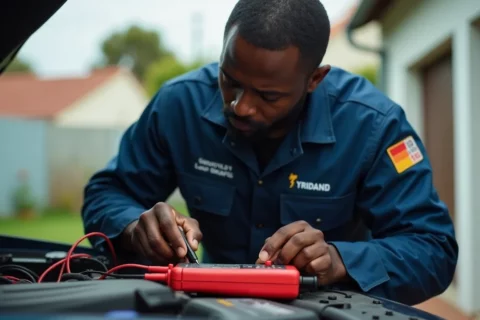
A routine service is the obvious example. Oil changes, air filters, cabin filters, and spark plugs on engines with sensible access can all be done at home or at work. Battery testing and replacement also fit, which is one of the most useful mobile callouts in Cape Town traffic. If a Toyota Corolla or VW Polo refuses to start because the battery has packed up, there is no point paying for a tow if the fix is a tester, a replacement battery, and a quick charging-system check.
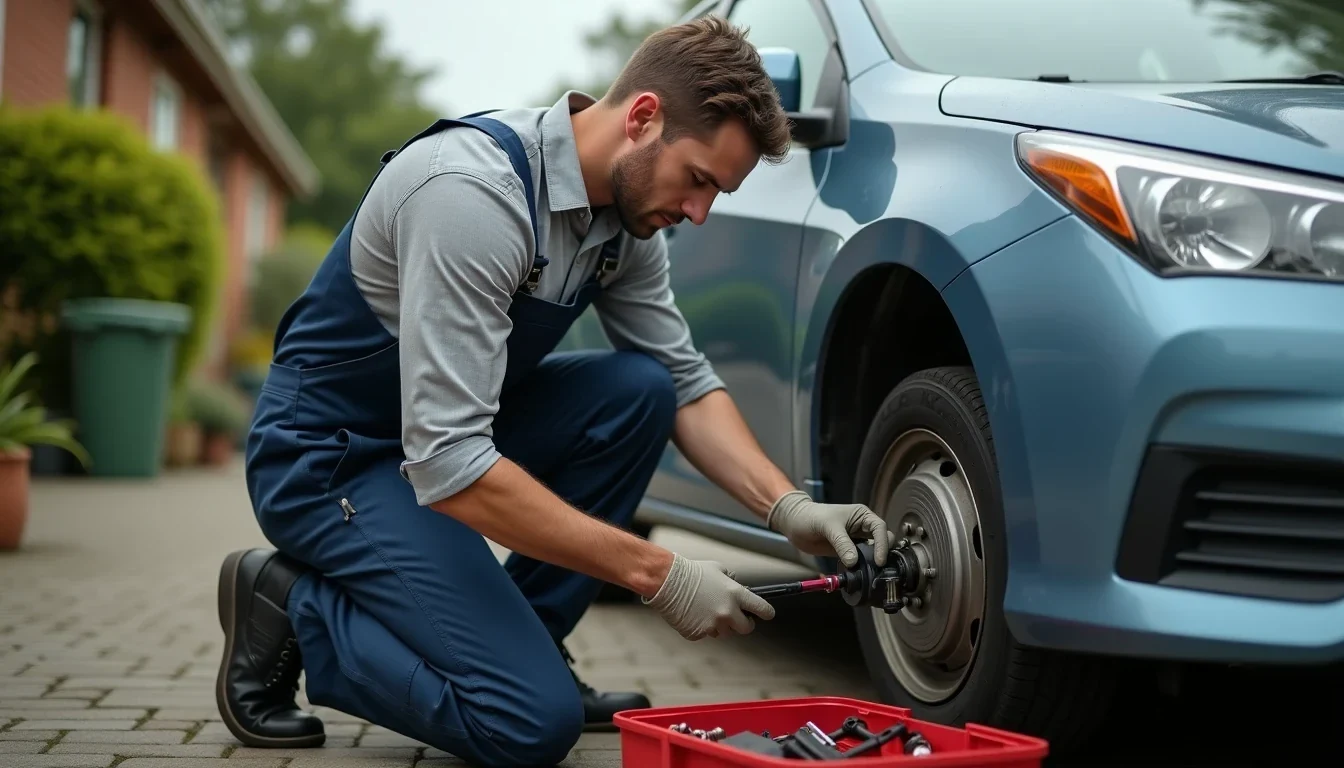
Brake work is another good fit. Front or rear pads and discs on most passenger cars are manageable on-site when the calipers behave and no odd hardware is seized. A mobile mechanic can also deal with smaller faults that waste an entire morning if left alone, such as a failed relay, a blown fuse, a dead indicator bulb, or a stubborn warning light that needs proper scan-tool diagnosis.
Jobs that usually suit a mobile visit
- Minor and intermediate servicing
- Battery testing, jump-starting, and replacement
- Brake pads and discs on accessible setups
- OBD-II diagnostics for warning lights and misfires
- Fuse, relay, bulb, and basic wiring faults
- Easy-to-reach belts, wiper blades, and some sensors
The common thread is access. If the part can be reached, tested, and replaced without a hoist, press, or specialist machine, mobile service is often the smart choice.
When the driveway starts to cost more than the workshop
Mobile service stops being convenient and starts becoming slow, expensive, and slightly silly at a certain point. This usually happens when the fault is unclear and the car keeps asking for more testing.
An intermittent misfire is a good example. A Ford Focus that shudders, loses power, and throws a check-engine light might begin with a simple scan showing a cylinder misfire code such as P0301. A mobile mechanic can absolutely start there. Spark plugs, coil packs, injector connectors, and visible wiring can be checked on the spot. If the obvious items are fine, the diagnosis gets messy fast.
This kind of fault may need fuel pressure testing, compression testing, vacuum-leak tracing, smoke testing, and sensor waveform checks. Some of that can be done outside. Much of it is awkward, slow, and weather-dependent. If the fault only appears when the engine is hot, under load, or after a long run, the car may need to stay put for proper testing. A workshop can keep the vehicle overnight, run repeated checks, and use tools that a mobile van is unlikely to carry for every possible scenario.
The problem is not capability alone; it is efficiency. A driveway diagnosis that needs three return visits, more labour, and extra call-out time can easily become a worse deal than putting the car in a workshop once and getting the whole thing sorted under one roof.
Signs the job is drifting out of mobile territory
- The fault comes and goes without a clear pattern
- The car needs testing while hot or under load
- You are already beyond basic scan-tool diagnosis
- The next step needs smoke testing, fuel pressure checks, or deeper wiring work
- The mechanic needs the vehicle for a longer period, not a quick visit
A decent mobile mechanic will not keep nibbling at a problem just because they can. If the fault is turning into a drawn-out diagnostic puzzle, the fixed workshop is the cleaner answer.
Some repairs should not be attempted on the driveway
Some repairs involve safety issues, not just convenience. Once a job involves heavy components, undercarriage access, or precise alignment, the workshop stops being optional.
Clutch replacement is the clearest example. A Toyota Hilux or BMW 3 Series with a worn clutch may need the gearbox removed, and that is not driveway work. The gearbox is heavy, awkward, and unforgiving. You do not want it balanced on a jack in a tight space while someone tries to line it up by feel. A proper workshop lift and transmission jack are not luxuries here. They are the difference between a controlled repair and a dangerous one.
The same logic applies to bigger suspension and steering work. Replacing control arms, tie rod ends, or shock absorbers can be straightforward in the right circumstances, but once those parts change, the car should go for a proper wheel alignment. That needs alignment equipment, not guesswork with a tape measure and crossed fingers. If the steering wheel sits crooked or the tyres start scrubbing after the repair, the job was not finished properly.
Heavy machining also belongs in a workshop. Pressing wheel bearings, machining brake rotors, or using a hydraulic press for suspension bushes requires stable equipment and enough force to do the job cleanly. Trying to improvise that on a driveway is how a repair becomes a comeback.
Repairs that should move off-site
- Clutch replacement
- Gearbox removal and installation
- Major suspension and steering work that needs alignment
- Wheel bearings that need pressing
- Brake rotor machining
- Engine, gearbox, or differential removal
There is no shame in telling the customer the car needs to move. In fact, that is what builds trust. Anyone can say yes to every job. The mechanic worth keeping knows when the safer answer is a tow to the workshop.
The good mobile mechanic knows the limit
The best mobile service does not try to do everything. It solves the right jobs quickly and refuses the wrong ones before they waste money or create risk.
A battery replacement in a driveway can be finished in under an hour, with the old battery taken away and the charging system checked before the mechanic leaves. A minor service can be done at home while the owner works from the kitchen table or office desk. Brake pads and discs on an accessible car can be handled without a workshop visit. These are exactly the sorts of repairs that suit mobile service in Cape Town, where nobody wants to spend half a day sitting in traffic for a job that did not need a lift.
The moment the repair needs hoists, alignment machines, presses, heavy lifting gear, or specialist programming tools, the equation changes. A workshop is not a failure of mobile service. It is the proper tool for the job.
Drivers should expect convenience where it makes sense, and honesty where it does not.