Turning up the radio does not fix brakes. Cape Town drivers stuck on the N1 or crawling through Long Street traffic know this instinctively, yet the temptation persists. A faint squeal under light pedal pressure becomes background noise, then a grind, then a steering wheel shudder that demands attention. By that stage, the bill has multiplied.
Brake systems talk constantly. Learning their vocabulary saves money and keeps you out of the vehicle behind you on De Waal Drive.
The Sounds That Start Small
Squealing is the brake system’s opening argument. Most brake pads carry a small metal tab set at a precise depth in the friction material. When wear reduces that material to roughly two or three millimetres, the tab scrapes the rotor with each wheel revolution. The resulting high-pitched noise is engineered deliberately, a mechanical reminder that replacement is due.
Not every squeal signals imminent disaster. Overnight surface rust from Cape Town’s damp Atlantic air can produce a brief squeak on first morning use. Dust intrusion or certain harder pad compounds can also chirp under light braking. These noises often fade as heat and friction clean the contact surfaces. A wear-indicator squeal returns predictably, usually when approaching traffic lights or descending hills, and it worsens rather than disappears.
Grinding is an entirely different conversation. This harsh metallic roar means the friction material has worn through entirely, exposing the steel backing plate to direct rotor contact. The pad has become a metal clamp scraping against cast iron. At this point, every application of the brakes machines fresh damage into the rotor surface, gouging grooves and generating destructive heat.
How a R1 500 Job Becomes a R8 000 Job
The economics of brake neglect follow a predictable escalation. Fresh pad replacement on one axle typically runs between R1 500 and R3 000, depending on vehicle model and pad specification. This addresses the wear indicator’s warning at the optimal moment.
Ignore that window and rotor damage becomes unavoidable. Scored or overheated rotors cannot always be machined back to specification. Replacement adds R800 to R2 500 per rotor, with most axles requiring paired replacement to maintain even braking. The simple pad job has already doubled or tripled.
Prolonged metal-on-metal contact inflicts collateral damage. Caliper pistons, seals, and guide pins suffer extreme thermal stress. A seized caliper or leaking seal demands replacement at R1 500 to R5 000 per unit. The total repair bill now spans thousands rather than hundreds of rand, and the vehicle may have been genuinely dangerous for weeks.
Friction material wears predictably by design; everything behind it wears catastrophically without that protection.
When Feel Replaces Sound
Not all brake warnings arrive through the ears. A soft or spongy pedal that travels closer to the floor before engagement points to hydraulic problems. Air in the brake lines, low fluid level, external leakage, or master cylinder seal failure all reduce the system’s ability to transmit pedal force efficiently. The car still stops, eventually, but the safety margin has evaporated.
Steering wheel vibration or pulsation under braking usually indicates rotor warping. Uneven rotor surfaces cause pads to grab and release rhythmically, transmitting that oscillation through the suspension to the driver’s hands. Warping typically follows severe overheating, whether from prolonged downhill braking on Chapman’s Peak or riding the pedal in heavy traffic.
Pulling to one side during braking reveals asymmetric problems. A seized caliper on one wheel, a collapsed flexible hose restricting return flow, or contaminated pads on a single side all create unequal braking force. The vehicle becomes unpredictable under hard stopping, particularly on wet roads or uneven surfaces.
The Hidden Infrastructure
Pads and rotors dominate driver attention because they wear visibly and noisily. The supporting cast determines whether new pads actually function.
Brake fluid carries pedal force through non-compressible hydraulic pressure to each wheel caliper. The fluid is hygroscopic, pulling moisture from the atmosphere through microscopic seals and reservoir vents. Water content progressively lowers the fluid’s boiling point. Under sustained braking down Sir Lowry’s Pass, that moisture can vaporise, creating compressible gas bubbles and sudden pedal fade. Most manufacturers recommend complete fluid replacement every two to three years or 40 000 to 60 000 kilometres.
Flexible brake hoses bridge the rigid chassis lines to moving wheel assemblies. These reinforced rubber or braided steel lines accommodate suspension travel and steering angle. Internal deterioration can create a one-way valve effect, trapping pressure at the caliper and causing constant light drag. External cracking risks catastrophic burst under emergency braking pressure. Hoses degrade invisibly until they fail completely.
Calipers convert hydraulic pressure into mechanical clamping force. Corrosion, dirt ingress, or degraded seals cause pistons to stick partially extended. A dragging caliper overheats that corner’s pads and rotor, accelerates wear, reduces fuel economy, and can render the vehicle undriveable if seizure progresses.
Reading Cape Town’s Specific Risks
Local driving conditions amplify brake system stress in particular ways. Steep descents from Table Mountain suburbs, Signal Hill, or the Constantia Nek area demand sustained braking that generates concentrated heat. Coastal humidity accelerates surface corrosion on rotors parked overnight. Stop-and-start congestion on the N2 or M3 increases pad wear rates through frequent light applications.
The city’s mixed road quality also matters. Pothole impacts can fracture brake hoses or knock caliper mounting brackets out of alignment. Vibration complaints after hard kerb contact or road defect strikes should prompt immediate brake inspection, even if pedal feel seems normal.
When to Stop Driving and Call
Certain symptoms demand immediate cessation rather than continued observation. A grinding noise that worsens with each stop, brake pedal sinking to the floor, visible fluid pooling beneath a wheel, or sudden increase in stopping distance all indicate active system compromise. The vehicle should not proceed to the workshop under its own power.
For less acute warnings, the timing window matters. A persistent squeal without grinding suggests days or low hundreds of kilometres remain before pad material expires. A mobile mechanic can assess pad thickness, rotor condition, and fluid state at your home or workplace, eliminating the risky interim driving to a fixed workshop.
What a Mobile Brake Assessment Covers
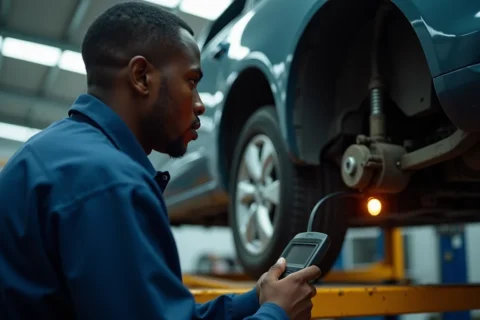
A competent brake inspection checks pad thickness on inner and outer faces, rotor surface condition and run-out measurement, caliper slide function and piston retraction, flexible hose integrity, fluid level and condition, and master cylinder response. The assessment should specify exactly which components require replacement, which remain serviceable, and whether machining or replacement is the appropriate rotor treatment.
Mobile service suits brake work particularly well. The vehicle remains stationary during inspection, the mechanic sees the car in its normal operating environment, and the owner avoids driving a potentially compromised vehicle through traffic to reach a workshop. For Cape Town drivers balancing work schedules and traffic congestion, this convenience often determines whether maintenance happens promptly or gets deferred until the grinding starts.
The Only Reliable Strategy
Brake systems do not heal themselves. Surface rust squeaks may quieten temporarily, but wear-indicator squeals progress inexorably to grinding. Grinding progresses to rotor destruction, caliper damage, and compromised safety. Each deferred intervention multiplies the eventual cost and increases the probability of a failure at the worst possible moment.
The drivers who spend least on brake maintenance long-term are those who respond to first warnings. A R1 500 pad replacement at the squeal stage prevents the R8 000 cascade that follows weeks of grinding. It also preserves the predictable stopping performance that Cape Town’s hills, traffic, and weather demand.