
A car that drove perfectly the night before can behave like a different machine on a cold Cape Town morning. You turn the key or press the button, the dash lights up, and then all you get is a click, maybe two, with the starter refusing to turn. The problem often shows up when people are already late, the school run is waiting, or the car is sitting in a parking bay with nowhere convenient to leave it.
Winter exposes existing battery problems. A battery that was hanging on through summer may cope badly once the temperature drops and the car starts drawing more power for lights, wipers, demisters and chargers. Many dead starts happen on mornings that feel ordinary until the engine refuses to catch.
When the car only clicks
The first sound tells you a lot. A single click usually means the starter is asking for power and not getting enough of it. Fast clicking can point to low voltage. A slow, lazy crank, where the engine turns over like it is dragging a trailer, is another warning sign. Sometimes the battery still has enough left to light the dashboard and unlock the doors, so people assume it is fine. It is not.
Mobile mechanic callouts often begin with the same story. The car ran normally the previous evening. No warning drama. No strange noise. Then morning arrives, the driver turns the key, and the battery refuses to deliver the surge needed to start the engine. That pattern usually means the battery was already weak, or something has drained it, or the charging system has not been doing its job.
Common signs that the battery is on the way out include:
- Slow cranking, especially first thing in the morning
- Headlights or interior lights that look dimmer than usual
- More than one jump-start in a short space of time
- A battery warning light on the dash
- Corrosion around the terminals
- A swollen or distorted battery case
Age matters too. The AA puts typical battery life at two to five years, depending on use and maintenance. A battery that is already a few winters old deserves suspicion.
What winter does to the battery
A lead-acid battery works by chemistry, and chemistry slows down when the weather turns cold. The reaction inside the battery is less lively, so the battery gives off less of the heavy burst of power the starter needs. At the same time, the battery has to work harder because the car asks for more electricity. Headlights stay on longer. Wipers run more often. Demisters and heaters get switched on early. Phone chargers stay plugged in. Short trips in stop-start traffic do not give the alternator much time to put the charge back.
Cape Town does not need harsh inland frost to expose this weakness. A cool July morning is enough when the battery is already tired. Many drivers only notice the battery when it fails completely. Before that, it usually leaves smaller clues. The engine takes longer to fire. The radio resets. The dashboard flickers. The start feels less confident than it used to.
A healthy battery can still struggle if the vehicle is being used in a way that keeps it half empty. Short trips to the shops, a lot of idling, and repeated use of accessories all add up. A battery that never gets a proper recharge starts the season already behind. Winter just pushes it over the edge.
Flat, failing and not charging the same thing
People call every dead battery a flat battery, but that label hides three very different faults.
A flat battery is simply discharged. It may have been left with the lights on, an interior lamp could have stayed on overnight, or a charger may have been left plugged in. Sometimes a car has sat for too long without being driven, and the battery has drained down. In that case, the battery may be healthy enough to recover once it is charged properly.
A failing battery is different. It has worn out inside. The plates have aged, the cells have lost capacity, or the battery can no longer hold enough charge to do its job. You can charge it and it may seem better for a short while, but the same problem returns. That is the battery approaching the end of its life.
A charging system fault sits somewhere else entirely. The battery may be fine, but the alternator, regulator or related wiring is not putting enough charge back into it while the engine is running. In that case the battery keeps arriving home undercharged, then it eventually becomes too weak to start the car.
A simple way to think about it is this:
- Flat battery: it ran down for a reason and may recover
- Failing battery: it is worn out and will not hold up for long
- Charging fault: the car is not refilling the battery properly
- Electrical drain: something is drawing power when the car should be asleep
The battery warning light can point to either a battery issue or a charging problem. It is not a verdict on its own; it is a clue.
Why a replacement can miss the real fault
A new battery is easy to sell and satisfying to fit, so people often stop there. The car starts, the customer leaves, everybody feels sorted. Then a week later, or a month later, the same dead-start story comes back. That usually means the battery was the symptom, not the cause.
If the alternator is weak, the new battery is being fed badly from the start. It may show full voltage at rest and still fail after a few drives because the car is not charging it properly. If there is an excessive electrical draw when the ignition is off, the replacement battery will be pulled down just like the old one. The fault has not gone anywhere. It is simply waiting to be noticed again.
This is where a proper callout earns its keep. A mechanic who tests only the battery can miss the reason it died. A mechanic who checks the charging output and looks for unwanted current draw has a better shot at finding the real problem. That saves the owner from paying for a second battery that was never going to survive.
The cleanest repair is the one that stops the repeat failure. Otherwise the new battery just inherits the old mess.
What a mobile mechanic checks on site
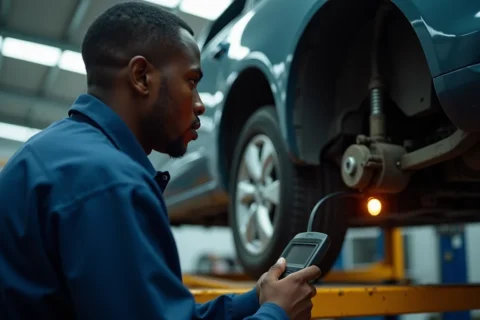
A mobile mechanic comes to the car, which is the main advantage when the vehicle will not start and towing would be a waste of time and money. The car can be checked at home, outside an office, or in a parking bay where it has become an inconvenience to everyone except the person trying to fix it.
On site, the mechanic will usually start with a battery test. That shows whether the battery can still hold charge and whether it has enough cranking power left. Then comes the charging check. With the engine running, the alternator output should sit in a sensible range, usually around 13.5V to 14.5V. If it does not, the battery may never be getting properly replenished.
A parasitic draw test comes next if the battery keeps dying without a clear reason. That checks how much power the car is using while switched off. A healthy vehicle should settle into a low resting draw once the systems go to sleep. If something is staying awake, the battery will keep losing charge overnight.
This approach is practical because it separates the likely causes instead of guessing. A driver does not need a lecture; they need a car that starts tomorrow morning as well as it starts after the jump.
When the battery has reached the end
Some batteries are simply done. No amount of charging brings them back to useful life. They may have had a long service, they may have been abused by short trips and cold starts, or they may have been weakened by heat, age and missed maintenance before the first winter failure showed up.
A battery at the end of its life usually shows a pattern. It starts weakly, then worse, then not at all. It may survive a jump-start and then fail again after the car sits for a day or two. It might test poorly even after a full charge. If the case is swollen, the terminals are heavily corroded, or the battery is older than the lower end of the AA’s two to five year window, replacement is often the sensible move.
Even then, the battery should not be changed in isolation unless the rest of the system has been checked. If a new battery goes in without checking the alternator and the off-state electrical draw, the replacement can end up in the same position as the old one. That is how people end up paying twice for the same breakdown.
A proper diagnosis is the difference between fixing a dead battery and fixing the reason the battery died.