
A fresh roadworthy certificate and gleaming paintwork can make a rebuilt car look like any other vehicle on the N1. This appearance is misleading. In South Africa, a Code 3 classification means the car was once declared permanently unfit for use, written off after accident, fire, flood, or theft damage that typically exceeded seventy to eighty percent of its market value. Someone rebuilt it, passed the legal steps, and now it sits on a lot with a price tag that makes you look twice. The question is whether that discount actually covers what you are buying.
What Code 3 Status Really Means
The “Built-up” label on eNaTIS is permanent. It does not wash off with a valet or expire after a few clean roadworthy tests. The vehicle was deregistered, stripped or damaged to the point where insurers or authorities judged it economically ruined. It was then reconstructed through a process involving police clearance, structural inspection, roadworthy testing, and data dot verification. Each of those steps has a purpose, but none of them guarantees the car was rebuilt well, or that its underlying damage has stopped causing problems.
Common reasons for the original write-off include chassis deformation from serious collisions, extensive fire damage, flood submersion, or theft recovery where stripping left the vehicle hollowed out. The rebuild may have addressed visible damage while leaving micro-cracks in the chassis, corrosion in hidden cavities, or electrical faults that surface months later. The eNaTIS record links the Code 3 status to the VIN forever, so every future buyer, insurer, and financier can discover the history with a basic check. You will not be the last person to know.
The Checks That Actually Matter
A standard pre-purchase inspection is not enough for a Code 3 vehicle. You need a layered verification process that starts with identity and moves through structure, electronics, and paperwork.
Begin with the VIN. Check the number stamped on the chassis, the engine block, the dashboard plate, the door jamb sticker, and the RC1 registration document. Any mismatch, re-stamping, or signs of tampering is reason to walk away immediately. Cloned or stolen vehicles sometimes surface in the Code 3 market because the rebuild process creates opportunities for identity manipulation.
Request the Police Clearance Certificate and examine it properly. This document confirms the vehicle is not stolen and that its identity has been verified by authorities. It is mandatory for re-registration, but its presence alone does not mean the rebuild was competent.
Bring in an independent structural specialist, not the panel beater who did the original work or someone connected to the seller. They need to inspect the chassis rails, sub-frame, suspension mounting points, crumple zones, and body shell for poor welding, misalignment, cut-and-join repairs, or stress fractures. A chassis that is five millimetres out of true will chew through tyres, pull under braking, and handle unpredictably on wet Cape Town roads.
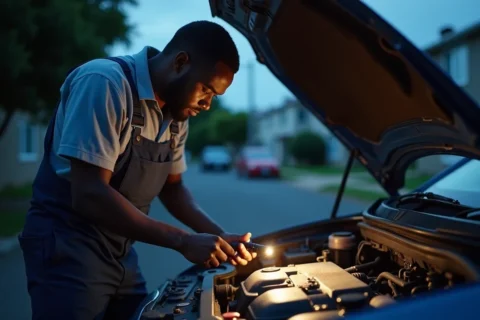
Have a comprehensive diagnostic scan performed with professional-grade equipment. This should cover all modules: engine management, gearbox, ABS, airbags, body control unit. Stored fault codes can reveal electrical damage from flooding, sensors that were never properly replaced, or airbags that deployed in the original accident and were merely reset rather than replaced. A mobile mechanic with the right scanner can do this at the seller’s premises before you commit.
Demand the full repair documentation. Original damage reports, itemised invoices for parts and labour, photographs from before, during, and after the rebuild. The absence of this paper trail suggests either slapdash work or something the seller prefers you did not see. Check the data dots on major components against the VIN. Their presence and consistency are legal requirements for re-registration, and gaps indicate either corner-cutting or component sourcing from questionable origins.
Why the Roadworthy Certificate Is Not Enough
A roadworthy test checks specific safety points at a specific moment. Brake pads have thickness, lights function, tyres have tread. It does not examine whether the chassis was straightened properly after a side impact. It does not pull fault codes from a module that intermittently fails. It does not verify that the airbag system will deploy correctly in a second collision. The certificate is a snapshot, not a biography.
Fresh paint is even less informative. It covers filler, mismatched panels, and rust that has been treated cosmetically rather than structurally. A Code 3 vehicle can look immaculate and still carry compromised crumple zones that will not absorb impact energy correctly in another accident. The roadworthy certificate and the paint job are both items the seller uses to justify the price. They are not evidence that the price is justified.
The Real Cost of Ownership
The purchase price is only the first figure in a longer calculation. Insurance for Code 3 vehicles is difficult and expensive. Santam, Old Mutual Insure, Discovery Insure, and other major underwriters often refuse comprehensive cover outright, offering only third-party, fire, and theft. Where comprehensive cover is available, premiums typically run twenty to forty percent higher than for an equivalent clean-history vehicle. The insurer’s logic is straightforward: hidden damage complicates claims, and distinguishing new damage from pre-existing conditions creates dispute risk.
Finance is similarly constrained. Absa, Standard Bank, FNB, and Nedbank are reluctant to lend against Code 3 collateral. Approval, if it comes, usually demands deposits of thirty to fifty percent, carries elevated interest rates, and may impose shorter repayment terms. The bank knows the asset is worth less and harder to recover value from if the loan defaults.
Resale value drops steeply. Expect thirty to fifty percent less than an equivalent Code 1 or Code 2 vehicle when you eventually sell. The buyer pool is smaller, more sceptical, and better informed than it used to be. Online history checks have made Code 3 status trivial to discover. You will not find someone who does not know, and you will not be able to price the vehicle as if they do not.
Future claims face extra scrutiny. An insurer may dispute whether damage from a new accident was genuinely new, or whether inadequate previous repairs contributed to the severity. Payouts can be reduced or denied if the Code 3 status was not fully disclosed at policy inception, or if the original rebuild is judged substandard. Any remaining manufacturer warranty is almost certainly void, because the factory specifications and structural integrity have been compromised.
Making the Discount Work
Not every Code 3 vehicle is automatically unusable. Some are rebuilt meticulously by specialists with proper documentation, genuine parts, and structural repairs that restore genuine integrity. The question is whether the price gap reflects the full burden of ownership you are accepting.
Calculate conservatively. Take the market value of an equivalent clean vehicle, subtract the likely resale hit, add the insurance premium differential over your expected ownership period, factor in the higher finance costs if you are borrowing, and include a contingency for repairs that stem from hidden damage. The result is the maximum you should pay. If the asking price sits above that number, you are not getting a bargain. You are absorbing someone else’s risk for insufficient compensation.
Consider also your use case. A Code 3 vehicle that will do short suburban trips with a mechanically sympathetic owner is a different proposition from one that will carry a family on the N2 daily or tackle long rural distances where breakdown assistance is hours away. The same rebuilt car can be reasonable in one context and reckless in another.
When to Walk Away
Certain findings should end the conversation regardless of price. Mismatched VINs across the vehicle. Missing or suspicious Police Clearance. A structural inspection that reveals welding in crumple zones, frame rails that have been sectioned improperly, or corrosion blooming from inside cavities. Diagnostic scans showing airbag modules that have fired and been reset rather than replaced. Repair documentation that stops abruptly before the most serious damage was addressed. Data dots that are missing, mismatched, or obviously applied as an afterthought.
These are not negotiable flaws. They are indicators that the rebuild was done to pass minimum requirements rather than to produce a genuinely roadworthy vehicle. The seller’s urgency, the apparent cleanliness of the car, and the temptation of a low monthly payment should not override what the inspection reveals.
Final Assessment
A Code 3 vehicle can work for a buyer who verifies thoroughly, calculates honestly, and enters the transaction with eyes open to the long-term implications. It is not a hidden status that clever negotiation can overcome. The classification is permanent, discoverable, and consequential for safety, insurance, finance, and resale. The discount must be large enough to cover all of this, because the next buyer will discover the same history and make the same calculations. If the numbers do not work, the bargain is not a bargain. It is a liability wearing new paint.