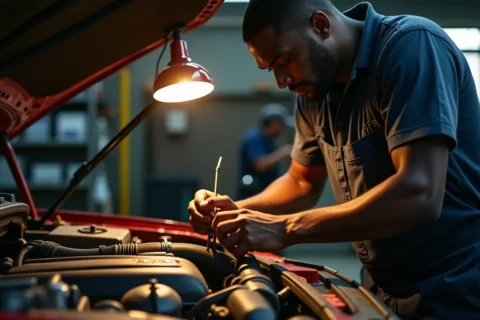
A 2018 Polo with 45 000 km looks like a steal on Facebook Marketplace. The seller swears it was only used for school runs in Claremont. But when our mobile mechanic lifted the bonnet last month, the oil cap was caked in sludge, the brake discs were worn to the minimum, and the battery was on its third replacement. The odometer had not lied, but it had not told the whole truth either.
Kilometres measure distance, not suffering. A car that never warms up properly wears differently from one that cruises the N1. For Cape Town buyers hunting in the used market, understanding that gap helps them choose between a solid purchase and a money pit that arrives by tow truck.
Why Low Kilometres Can Mislead
The assumption that fewer kilometres equals less wear is wrong. Engine stress, component fatigue, and fluid degradation all depend on how those kilometres were accumulated.
Cold starts are the silent killer. When an engine fires from cold, oil sits in the sump instead of circulating. Metal contacts metal. Fuel mixtures run rich, washing cylinder walls and diluting lubrication. A car started five times daily for 3 km trips to the shops in Sea Point accumulates more internal damage in a year than one that drives 30 km to Stellenbosch in a single, warm run.
Short trips compound the problem. The engine never reaches the 90°C-plus where condensation evaporates from oil and exhaust systems. Water and unburnt fuel accumulate, forming acidic sludge that blocks oil galleries and corrodes mufflers from the inside. Manufacturers including Toyota, Volkswagen, and BMW explicitly classify this pattern as “severe service” in owner manuals, demanding oil changes at roughly half the normal interval. Most sellers never follow this, and many never know it exists.
Stop-start traffic on the N2 or M3 during rush hour adds another layer of wear. Brake pads and discs take a beating from constant friction. Automatic transmissions heat up with every shift, breaking down fluid faster. Manual gearboxes wear clutches through repeated engagement. Batteries never fully recharge between starts, leading to sulfation and premature failure. The odometer might read 50 000 km, but the mechanical reality reads closer to 100 000 km of highway-equivalent wear.
What the Interior and Exterior Reveal
The odometer is a number on a screen. Physical evidence is harder to fake.
Start with the driver’s seat. Bolster wear, creasing, and flattened foam suggest thousands of entries and exits, not the occasional Sunday drive. A steering wheel with polished smooth patches or worn stitching tells the same story. Pedal rubbers, especially on the brake, reveal heavy use. If these components look tired on a “low-mileage” car, either the kilometres have been wound back or the driving was brutal enough to accelerate wear disproportionately.
Check the tyres. Tread depth matters, but age matters more. The DOT code on the sidewall shows manufacture week and year. A 2019 car riding on 2020-dated tyres with full tread suggests the originals were replaced early, possibly from standing idle too long. Rubber degrades regardless of use. Old tyres harden, crack, and fail catastrophically on wet roads.
Fluids tell their own tale. Engine oil should be amber and clean on a recently serviced car. Black, sludgy oil indicates neglected changes or severe service conditions. Coolant should be bright and free of oil contamination. Brake fluid darkens with moisture absorption over time. Each fluid check takes thirty seconds and reveals whether maintenance matched the seller’s claims.
The underbody completes the picture. Surface rust is normal on older Cape Town cars, especially those parked near the coast. But structural corrosion on chassis rails, suspension mounts, or floor pans suggests salt exposure, standing water, or crash damage repairs. Fresh underseal can hide recent welding. Look for overspray on adjacent components, mismatched panel gaps, or welding seams that do not match factory patterns.
Paperwork and Verification
Service records are non-negotiable. A stamped book with invoices from recognised workshops provides a timeline of care. Cross-reference dates against mileage entries. Gaps of eighteen months with no service, followed by a sudden drop in annual kilometres, warrant suspicion. Digital records through manufacturer portals or dealership networks are harder to forge and increasingly common.
Licence disc history adds another verification layer. Annual renewal records show declared odometer readings at specific dates. A car that reportedly did 8 000 km per year suddenly jumping to 2 000 km suggests either changed usage patterns or tampering.
TransUnion’s vehicle verification service aggregates data from insurers, workshops, licensing authorities, and SAPS. Their reports flag mileage inconsistencies by comparing readings across multiple touchpoints. A car showing 60 000 km at its last service but 45 000 km on the current disc is an obvious rollback. The service also identifies write-off status, outstanding finance, stolen vehicle flags, and cloned identities where a stolen car assumes a legitimate VIN.
Vehicle cloning is particularly prevalent in high-demand segments. A thief steals a white 2017 Toyota Hilux, finds a matching legitimate vehicle, and duplicates its registration documents and number plates. The cloned car sells cheap and fast. Only VIN verification against national databases like NAAMSA reveals the fraud. Check the dashboard VIN against the door jamb plate, the licence papers, and the TransUnion report. All three must align exactly.
When to Call a Mobile Mechanic
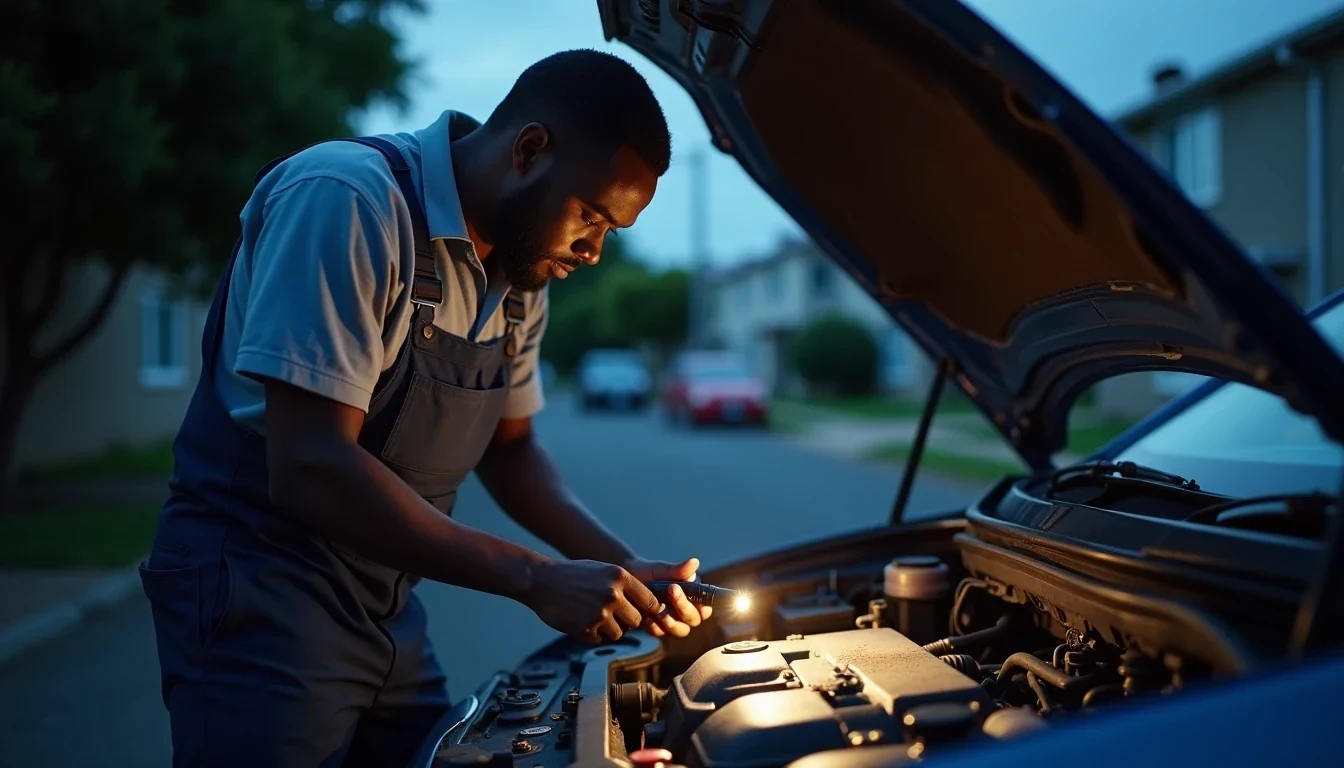
Pre-purchase inspections by independent mechanics catch what buyers miss. For Cape Town drivers, a mobile mechanic brings diagnostic equipment directly to the seller’s location, whether in Constantia, Bellville, or a petrol station forecourt in Observatory. This convenience helps buyers, because sellers often resist driving to workshops and time pressure kills deals.
Book the inspection for daylight hours on a dry day. Wet engines hide leaks. Darkness hides bodywork issues. A competent inspection covers compression testing, fault code scanning, underbody examination, and road testing. The mechanic assesses not just current condition but imminent failures: a clutch slipping under load, a timing belt approaching its interval, a gearbox showing early shift harshness.
The cost typically runs between R800 and R1 500. Against a R150 000 purchase, this is minimal insurance. It is essential protection against discovering R40 000 in deferred maintenance three weeks after signing.
Reading the Seller’s Story
Sellers shape narratives. “One careful owner” often means one owner who deferred everything. “Only used for short trips” is an admission of severe service conditions, not a virtue. “Full service history” means nothing if the services were at irregular intervals or non-specialist workshops.
Ask specific questions. Where was it serviced? Why are you selling? What work was done in the last two years? Hesitation, vague answers, or shifting details suggest concealment. A seller who knows the car’s history will volunteer specifics: the clutch replaced at 80 000 km, the aircon regassed last summer, the intermittent warning light that never quite triggered a fault code.
Test drives reveal more than static inspection. Cold-start the engine yourself. Listen for rattles that disappear as oil circulates. Accelerate hard through the gears in a manual car; clutch slip shows under load, not at idle. Brake firmly from 60 km/h; pulsing through the pedal indicates warped discs. Find a hill and test handbrake hold. Each check takes minutes and exposes problems the odometer cannot.
The Highway Alternative
Not all high-mileage cars are worn out. A 2016 Honda with 180 000 km of N1 commuting, regularly serviced, represents a fundamentally healthier machine than an identical model with 60 000 km of cold starts and traffic jams. Highway kilometres are easy kilometres: steady temperatures, minimal braking, constant oil circulation, fully charged batteries.
The market often misprices this distinction. Buyers gravitate to lower numbers on dashboards. Smart buyers look past the number to the pattern behind it. A full service history with 15 000 km intervals on synthetic oil, motorway-heavy use, and recent timing belt replacement beats a low-mileage garage queen with dried seals, degraded fluids, and a maintenance record full of gaps.
Final Checks Before Signing
Verify the VIN in three places minimum: windscreen base, driver’s door jamb, and engine block stamping. Mismatches indicate cloning or major structural repairs. Confirm the seller’s identity matches the registration documents. Outstanding finance transfers to the new owner unless settled before sale; TransUnion reports identify this risk.
Inspect the spare wheel well and panel gaps for accident repair evidence. Fresh paint on one door, overspray on rubber seals, or welding in structural areas all suggest crashes the seller omitted. No accident history on a report does not guarantee no accidents; it only means none were claimed through insurance or reported to police.
Negotiate based on findings, not emotion. A car needing R12 000 in immediate maintenance is not “priced to sell” at market rate. Factor mobile mechanic inspection costs, immediate service requirements, and probable near-term repairs into your offer. The cheapest car to buy is rarely the cheapest to own.
The odometer is evidence, not verdict. Cross-reference it against service records, physical condition, verification services, and independent inspection. In Cape Town’s used car market, the well-maintained highway warrior with honest kilometres often outlasts the low-mileage garage ornament that never quite warmed up.